
Rethinking Cannabis- the most overlooked psychedelic

On this 420, I want to shift the conversation about cannabis. Even if just slightly.
Please hear me out.
From my vantage point, cannabis has long been the red-headed stepchild of the psychedelic family. When it comes to therapeutic value, it's almost completely absent from the conversation. Sometimes it doesn't even make the cut as a "real" psychedelic. And it is most certainly disregarded for its transformative depth.
In our culture, cannabis has become synonymous with checking out - numbing, distracting, passively consuming. Used with the same casual cadence as cracking a beer: at a party, hanging with friends, binging Netflix.
And here's the thing: of course that's what we get when that's how we use it.
The research is clear that set and setting profoundly shape outcomes. We know this. Before other psychedelic journeys, people engage in dietas, social media fasts, days of journaling and intention-setting. They curate playlists, choose their environment with care. They show up ready to be changed.
But with cannabis? Nada.
If we're serious about using psychedelics for healing and transformation, we would do well to re-learn how to work with this particular one — because cannabis is:
- The most legally accessible and financially affordable
- Locally grown and already present in millions of households
- And in my experience working with plant medicines: one of the most powerful psychedelics I've ever encountered
That last one might not land yet. But, what I've observed in my own research is that cannabis is less a blunt instrument than a shape-shifter. It tends to meet people at the level of their preparation, their capacity, their inner orientation. Set and setting aren't just relevant here. They may be everything.
Within a thoughtful, supported context, cannabis can open doors to somatic release, nervous system regulation and reorganization.
In a case study I co-authored, we documented cannabis used as psychotherapeutic support for trauma. What we observed was striking: a 98% reduction in symptoms associated with D-PTSD, alongside meaningful shifts in emotional regulation, self-perception, and relational capacity. It's early work, and I hold it with appropriate humility. But it points toward something worth taking seriously.
My intention here isn't to romanticize. It's to widen the frame.
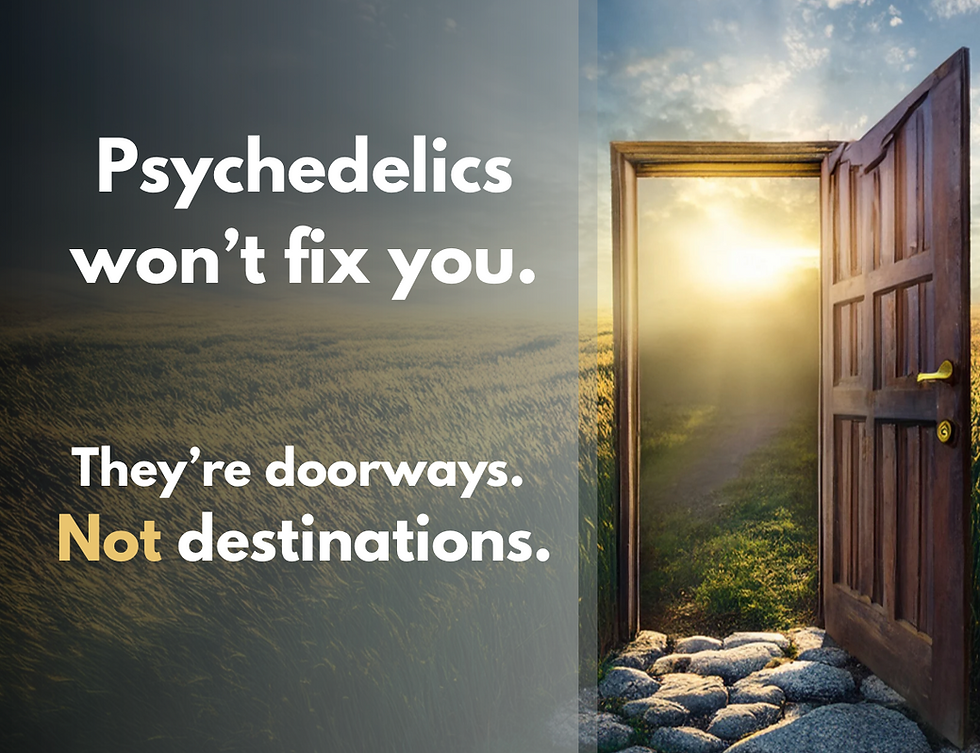
Cannabis doesn't carry a fixed impact. It's shaped by context, intention, and the quality of the container in which it's held. We've spent years building that kind of rigor around other substances - training facilitators, developing protocols, learning how to show up. I believe that cannabis deserves the same.
The plant has been here the whole time. Maybe the question was never about the cannabis. It was always about how we showed up to meet it.
📄 Full article: https://pmc.ncbi.nlm.nih.gov/articles/PMC9947284/


Comments