
Who Gets In: The Screening Process of Underground Facilitators
Updated: Aug 1
This is article #5 in the series “Facilitating Transformation: Insights from the Psychedelic Underground”

When we think about underground psychedelic work, I’d say it’s typical to have a snapshot that includes maybe some loose, informal meetup in someone’s living room. Maybe there’s a candle, some sage, a John Hopkins playlist. And perhaps a copy of Michael Pollan’s How to Change Your Mind somewhere.
After interviewing 27 underground facilitators for my doctoral research, I’d like to challenge that snapshot, or at the very least, bring some more nuance to it.
Specifically, I hope to shine light on the screening process: how facilitators determine who is and isn’t ready for this work. From my perspective, this is perhaps the most important question in psychedelic care, especially as psychedelics become more popularized. Because if we don’t get screening right, people can be unnecessarily subjected to potential risk and/or harm.
I want to add here, too: facilitators screen clients in such diverse ways, based on many factors we don’t have time to cover here. My intention isn’t to call out any approach or tradition, but to offer a menu of considerations that facilitators shared with me, in hopes that it can support better and more effective screening for anyone doing this work, whether that happens in retreat centers, clinics, or living rooms. We all have so much to learn from each other about psychedelic care, and nobody has the corner on wisdom here.
How Screening Starts
Before anyone sits with any substance or before a date is even discussed, most of the facilitators I interviewed do a significant amount of screening. Many are evaluating someone’s medical history, psychiatric medications, current life circumstances, social support, budget, and spiritual orientation. The process many described is far from casual or informal. It’s where their care begins, and while specifics varied from facilitator to facilitator, most took this aspect of their role very seriously.
What’s important to understand about the underground is how connections between facilitator and seeker actually form. There are no ads. No Google listings. Because most of this work remains illegal, the only way into this world (for most) is through someone who already knows the way.
But word of mouth isn’t just a marketing strategy. It’s actually a sophisticated safety mechanism:
“Most of my clients come to me through word of mouth. Someone has already worked with me or someone knows me. I’m not advertising publicly, and the people who need to find me will find me. And I trust that" (Interviewee 5).
Another facilitator elaborated more: “We have word of mouth referrals only. We don’t get people from any other way. They name a person who has already sat with us and that person tells them about our proceedings, what exactly it is we do, and their own personal experience with us. So that trusted person, when they invite someone, they have already oriented them on what and how we do things" (Interviewee 16).
I really appreciate what this actually does: by the time a prospective client makes contact with a facilitator, they’ve already been vetted by someone who has done this work themselves. While this is an informal introduction, it is meaningful nonetheless. A person will better know what they’re entering. They’ve heard it described by someone they know and hopefully trust. In this way, the referral process serves as a first layer of trust, knowledge, and preparation before the formal process even begins.
One facilitator described her approach to initial selection: “My selection process is to let people weed themselves out. I do not pursue anyone. They come to me… they set a session up, they take me to coffee and we must vibe. That’s part of my selection process”
(Interviewee 1).
These words: “we must vibe”are really interesting to me. Because while it sounds casual, there seems to be more to it. What this facilitator is describing is a felt sense assessment of relational compatibility or fit. And while some dismiss this aspect of screening to be unnecessary, I believe it warrants more attention, since the quality of the relationship between a therapist and client is the number one predictor of therapeutic outcomes. Obviously, more research is needed here, but I believe how a facilitator and client "vibe" is an under-explored but highly meaningful aspect of screening.
Physical and Medical Safety
Once contact has been made and a seeker and facilitator decide to move forward, the formal screening begins. Some facilitators have forms, some conduct lengthy interviews, some even do non-medicated sessions together to gauge and promote readiness.
Regardless of the methodology, one layer of screening starts with the body.
We know certain medical conditions — particularly cardiovascular concerns and a history of psychosis or active psychotic disorders — create real contraindications for psychedelic work. Facilitators in my study took this seriously, not as a procedural hoop to jump through but because they’d seen and experienced first-hand what happens when this is skipped.
One facilitator described turning someone away the morning of his scheduled session when his blood pressure was dangerously elevated:“He struggled with really high blood pressure, and psilocybin raises your blood pressure. The morning of the journey, I don’t know if it was anxiety or what, but his blood pressure was through the roof” (Interviewee 7).
She didn’t proceed. The session didn’t happen. That decision was the care.
Screening for medications require equally careful and even skillful navigation. Because many psychedelics act on serotonin pathways, SSRIs and similar pharmaceutical drugs can range from dulling the experience to creating active risk. Facilitators described consulting with specialists, sending clients back to their prescribers for tapering plans, and even building networks of support to manage complex pharmaceutical situations:
“If they are on more than two medications that are contraindicated, so either antipsychotic, an SSRI, an SRI, or if they’re on a cocktail, I typically go to the spirit pharmacist [a specialist in psychedelic contraindications]. He’ll help evaluate and give a titration plan. Then the client goes back to their medical practitioners” (Interviewee 13).
In a society where more and more people are taking medications, these screening considerations are essential for safety. Gratefully, more attention is being given to medical screening. But physical safety is just the starting point.
Psychological Readiness
In addition to physical safety, the facilitators I interviewed described assessing psychological readiness. There were approaches that seemed quite sophisticated and more human-centered than a lot of what is typical in the field.
Beyond the critical work of checking for diagnoses, many facilitators tried to understand how a person relates to their own inner experience. What is their window of tolerance for discomfort? Can they be present with pain? One facilitator elaborated:
“The biggest thing that I use for screening is, can you tolerate feeling your body? Can you be with your body? Can you stay curious and compassionate about the parts of you that are the hardest to look at?” (Interviewee 8).
This particular question, can you tolerate feeling your body is doing a lot of work. It’s asking about capacity for awareness, tolerance, and self-compassion all at once. It’s asking whether the foundation is there for the work that the medicine might invite.
Another facilitator described how she approached psychiatric history with similar nuance:
“It’s about understanding where they’re coming from, what work they’ve done already, what their diagnoses are, and if they think those diagnoses are real or not. I ask somebody what their diagnosis is. I always ask, ‘do you think that’s accurate?’ Because even if they say no, it gives you information. It’s just orienting” (Interviewee 15).
I find this fascinating. This facilitator goes beyond just asking about a specific diagnosis. She’s assessing the person’s relationship to their own diagnosis and story. And this feels like the difference between reading a label and actually opening the jar to all the textures involved.
Also, while this is a bit controversial and sensitive, some facilitators felt that a diagnosis or history of trauma doesn’t automatically disqualify someone from this work. Facilitators cautiously shared that what matters more is the person’s current stability, their relationship to their own history, and whether they have the inner and outer resources to metabolize what might come up. Psychedelic experiences can surface repressed memories, intense somatic responses, and emotions that have been buried for years. A facilitator’s job during screening is not to determine whether someone has hard things inside them. Almost everyone does. Their job is to assess whether the conditions are right for those things to be met with care rather than overwhelm.
Another dimension of screening for psychological readiness deals with someone's intentions and expectations around doing this type of work. What someone intends to get from a psychedelic experience can reveal a great deal about their goals, their hopes, and most pertinent here, their readiness. Are they oriented toward discovery, or toward a specific outcome they’ve already decided on? Are they coming with curiosity, or with an agenda?
A person who arrives believing the medicine will fix their ailment, resolve a relationship, or deliver some kind of revelation is holding a kind of pressure about the experience. Several facilitators emphasized just how important it is to address expectations early on, because unrealistic expectations can set someone up for disappointment and profoundly diminish outcomes.
There's also something else worth naming here about expectations. When someone expects the medicine to do something specific, it's often an indicator that they haven't yet fully reckoned with their own role in the process - and that's important information. From my perspective, a skilled facilitator knows how to meet it with curiosity rather than judgment, gently reorienting someone from "what will this do to me?" toward the more generative question: "what am I willing to bring to this?"
Commitment, Expectations, and “Fix-Me Energy”
Facilitators also screened for something trickier to quantify than blood pressure or medication lists: a genuine readiness to do the work required for transformation. A willingness to change, not just be treated.
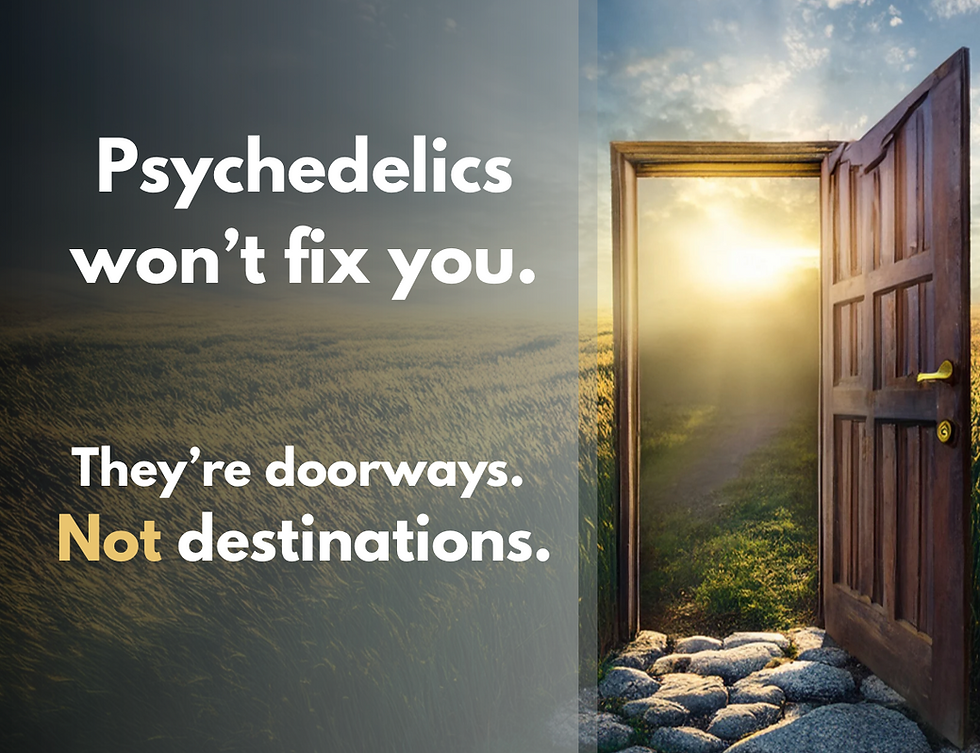
I alluded to this earlier, but want to bring in more nuance. A few facilitators described something distinct about expectations called "fix-me energy," which is the hope that the medicine will do something to you, rather than something with you.
"I try to understand what they're looking for. If they're coming in with a lot of fix-me energy, I try to address that and kind of reframe their expectations. Like, this work is going to require you to make changes and lean into it. If they can't integrate that vision, I'm less interested in working with them" (Interviewee 26).
"Everyone will have a discovery call with me so that I can understand what brought them to this work in the first place. I need to understand their motivation because one I want people to understand, like, this isn't a magic wand… it's a process, right? And you got to be committed to the process" (Interviewee 14).
From the facilitators' perspectives, the medicine is not going to change anyone's life. The person is going to change their own life, across hundreds of small choice points over weeks, months, and sometimes years after the experience itself. The medicine can create openings. It can illuminate what's been hidden, loosen patterns that have calcified, offer a felt sense of what's possible. But the actual work of transformation that belongs entirely to the person.
In this way, facilitators were essentially asking: is this person ready to be an active participant in their own transformation which is a step further than being psychologically stable enough to have the experience. Because what you bring to this process is, in large part, what you'll get out of it. Someone who arrives with openness, intention, and a willingness to do the unglamorous integration work afterward will have a fundamentally different experience than someone waiting to be fixed. And if someone isn't willing to put forth that work, a psychedelic experience might not be all that helpful in the long run.
This is something I believe might be supportive to outcomes overall - both in clinical and community contexts. Transformation requires participation.
Social Support
Another dimension of the screening process that I believe warrants more attention is oriented around social support. This goes beyond a therapist or facilitator, but the people that are in someone's life, including partners, family, friends, and community.
Facilitators in the study emphasized that this work is highly relational, so before agreeing to work with someone, they wanted to know: who is around this person? Who will be there when the medicine has worn off and the real integration begins?
“After the session, do you have someone checking in with you? Do you have somebody you can process this with? Are you seeing a therapist? Especially if somebody is having a difficult time or going through some big stuff. Do you have somebody that you can process this with?” (Interviewee 12).
Some facilitators were even more direct about the relational environment a person was returning to: “Who’s supporting you? What kind of support do you have? Does your partner think doing this work is bullshit? Do you have supportive people around you?” (Interviewee 8).
Does your partner think this work is bullshit? This question opens up an exploration about whether someone's home environment will support or undermine their process. This matters because 1.) as members of a tribal species, we function in systems and often gravitate towards what works best in systems. It's unrealistic to pull someone out of their system, give them an intervention, put them back in their system and expect sustained change. Sustained transformation of an individual works best when the whole ecosystem is supportive of change.
And 2.) psychedelic transformation doesn't end when the medicine wears off. It continues to unfold in the body, in their relationships, in the texture of ordinary days. This unfolding happens for weeks, months, even years afterward. So if there isn't support from a partner or the people who are closest to the journeyer, that can present real barriers to meaningful integration and transformation. The quality of someone's relational container matters enormously to what becomes possible.
According to the facilitators, social support shouldn't be an afterthought to this work. It’s part of the ecosystem of care, it's how humans fundamentally change, and it’s one of the key considerations they assesses and promote before the psychedelic experience.
Spiritual and Intuitive Screening
And then there's the spiritual dimension of screening that is admittedly the most difficult to articulate, but undeniably part of the process for many facilitators. Because not everything that matters in screening shows up on an intake form.
Several facilitators described a layer of screening that lives entirely outside of clinical frameworks: a gut feeling about someone, a sense of energetic alignment or misalignment, a felt knowing that this person is or isn't ready that arrives before any questionnaire has been completed. For some, this intuitive dimension was as important (and in some cases, more important) than anything a formal assessment could reveal.
For facilitators working within Indigenous or ceremonial traditions, this goes even further. The medicine itself, understood as a living intelligence with its own discernment, is understood to have a role in determining who is called to this work and when. Readiness, from this perspective, isn't only assessed by the facilitator. It's also revealed through signs, through synchronicities, through a sense of karmic connection or destiny that both the facilitator and the seeker might feel.
"I feel like the medicine work that I do has the ability to go very deep… And so I feel like it's completely spirit-led. I don't want to take on the responsibility of trying to discern who is ready for that. And so there's a component in it that is not of this world and that component is very strong" (Interviewee 11).
Some facilitators described a felt sense of deep connection with a prospective client. Others spoke of receiving what they understood as messages or guidance from unseen forces about whether to move forward with someone. And some described relationships with clients that felt less like a professional arrangement and more like an experience that was somehow meant to happen.
Western medicine typically raises an eyebrow at this. It's maybe too woo woo for some. And that's okay. But I believe we should be careful not to dismiss what many facilitators consider important to this process. They are describing a different epistemology, a different way of understanding the world, an intelligence that the rational mind alone cannot access.
What gives me hope is that across these conversations, there didn't seem to be tension between rigor and intuition, but a balance between the two. The most thoughtful facilitators I spoke with weren't choosing between their intake process and their intuitive knowing. They were using both. Everything needs to feel okay: the medical history, the psychological readiness, the social support, and it also needs to feel right in a way that goes beyond what any intake form could confirm.
That balance, I would argue, is itself a form of discernment and wisdom. One that the emerging field of psychedelic care would do well to take seriously, even when it resists easy measurement.
Screening Is an Act of Care
Interestingly, as facilitators shared about their screening processes, the word that never came up was gatekeeping.
What they described instead was something more like tending. Tending to the person who might be about to encounter something profound, disorienting, and potentially life-altering. Tending to the integrity of the space. Tending to themselves as facilitators — because they understood that agreeing to hold someone is a real commitment, not to be entered lightly.
One facilitator shared,“The slower you go, the faster you get there. So screen people. Don’t just throw medicine at people and hope that it’ll be good. Be really careful and know who your client is, know who you’re working with, have an understanding of attachment and trauma. Don’t just jump in there with everybody. The pace needs to go so slow. Just gentle, gentle, gentle” (Interviewee 8).
Yes. Gentle, gentle, gentle. These words calm my nervous system.
In a field where the peak experiences themselves can crack a person wide open, and the medicine journey can be like a hurricane in its honesty, the value of gentleness from the get go feels like the ultimate act of care. It’s the first signal to the journeyer that they are working with someone who appreciates their long game, and not just a flash-in-the-pan, quick-fix experience.
And in the underground, where there are no institutional guardrails, no licensing boards, no liability structures, the screening process is often the only structure that stands between the person and an experience they may not be ready for. The facilitators who do this well know that. And they treat the screening conversation accordingly.
Next up: what happens in the weeks and sometimes months between saying yes and sitting with the medicine. The art of preparation.
This article series is based on original dissertation research interviewing 27 underground psychedelic facilitators across the United States.


Comments